Friday, July 25, 2008

Turkey!

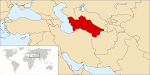
Turkey and Turkmenistan are not the same country. I realize that they start with the same first syllable, but they are as different as Canada and Cancun. And yet small hints remain. In Istanbul there were chickens living in the highway median. In Ankara girls wore headscarves with jeans too small across the ass (a contradiction that isn’t seen in Turkmenistan yet, but would not be out of place). Our oh-so-Western and educated guide in Ankara said Mom got food poisoning because of the weather (I almost fell over laughing in the van). Our tour-guides were also generally more often of the Central Asian model than the Western: their purpose was not to give an insider insight and show us the places outside the tourist track, but rather to make sure that we stayed on the tourist track and only received the party line. It’s like we paid for our own KGB agent to show us around and tell us that the man being arrested in front of us was a perfectly safe individual who hadn’t done anything wrong, and yet the government was right to arrest him (true story). One of our fellow tourists (whose family is Turkish) told me that Turkmenistan is exactly like Turkey 30 years ago and I believe it. As Turkey is an immensely cool country which I wouldn’t mind living in when I grow up, I see this as a very optimistic prediction for Turkmenistan which I’m doing my part to bring to fruition.

I will spare you all a detailed blow-by-blow of our itinerary. My parents and I spent three days in Istanbul getting on and off a bus seeing the major attractions of the city and the Bosphorus. Then after a quick flight to Izmir we spent a day wandering through the immense Ephesus ruins. It was a rather impressively-preserved site, but our attention was distracted by trying to keep ahead of the Italian cruise-ship crowd advancing behind us like a solid horde of bronze-tan wildebeests in big sunglasses. The next day was Pamukkale (“Cotton Castle” because of the calcium deposits that make it look like a tiered sugar cake) and the ruins of Hierapolis, a Roman town built to take advantage of the Pamukkale thermal springs. I resisted the temptation to get covered in expensive mud. Then we saw Cappadocia for three days (see below). After Cappadocia we jumped back in a plane to see Ankara for two days, viewing the makings of Western civilization at the Hittite ruins of Hattusas and Phrygia Gordion, as well as the massive monuments where the modern Turks worship their republic’s founder, Ataturk; very cool guy apparently. As might be apparent, the word “vacation,” when traveling with my parents, is not synonymous with “resting.” It is in fact more synonymous with “journeying,” or -- do I dare? -- “working.” My parents got on their plane back to America 10 hours before I was scheduled to return to Turkmenistan so I used that time to “vacation”: sitting in various scenic locations reading “The Book of Air and Shadows” by Michael Gruber (really amazing book, far better than “The Da Vinci Code,” of the same genre), playing on the internet (everyone should see “Dr. Horrible’s Sing-Along Blog” at drhorrible.com), and watching movies in an honest-to-God movie theater (“Wanted” is okay, the Batman movie wasn’t out yet in Turkey).

I hesitate to gush about Cappadocia because I don’t want to give away the surprise. Call me an ignorant cretin, but I hadn’t heard of Cappadocia before this trip. While we were in Istanbul we’d run into other tourists and the first thing they’d ask us was “have you gotten to Cappadocia yet?” and we’d say, “no, but it’s on our list,” and they’d turn away with looks of secretive envy. Neil Gaiman in “American Gods” describes places of power, places in the world where sacred energy has gathered and human beings traditionally respond by building temples, monuments, and (in America) road-side attractions. I felt it in Delphi in Greece, in the slave pens in Zanzibar (for different reasons), and now in Cappadocia, that intangible something that leaves a mark on your soul. It isn’t just the physical wonder of the place, an ancient lava bed where erosion has eaten away at the rock and turned the landscape into walls of curling, sloping cliffs like the sides of a macaroon pastry and towers euphemistically called “fairy chimneys.” And it isn’t just the history, where ancient Hittites began carving out homes in the soft rock towers to hide from invaders and then early Christians built monasteries and chapels as well as entire under-ground cities linked by miles-long tunnels that go over 40 meters into the ground and served as places of storage and refuge. Functioning underground cities. Seriously. But there is a sense of wonder that goes beyond all that, a sense of sacredness that goes deep into the soil and is tangible even when flying hundreds of feet over it in a hot air balloon at dawn. Thank you, again, Dad for that trip.

And thank you, parents, for paying my way out of Turkmenistan, for being delightful and sensitive companions, and for giving me a wondrous vacation to remember as the days tick away at site. Now all I have to do is wait for next summer. Dublin, anyone?

Tuesday, July 8, 2008

All-Vol

It’s a bit surreal to realize that “All-Vol,” the once-in-a-year all volunteer conference bringing in all 60-some Turkmenistan Peace Corps volunteers from across the country for education and debauchery, has finally come and gone. We looked forward to it for months, we came early (if we could) to start the festivities as soon as possible, and then stayed until the Peace Corps staff started to give us the angry eye. The first night I stayed over at Brit’s, a T-15 (a girl from the year before me, I’m a T-16), with the five acknowledged biggest partiers in T-stan PC. For someone who never went to a Greek party, never stayed longer than 30 minutes at a suites party, never got more than tipsy in 4 years of college, and never went clubbing within the United States borders, I’m doing a lot of catching up. Beer tastes a lot better these days, although vodka remains only bearable when it’s so smothered in juice and soda that it’s undetectable. Even watching other people take shots makes me feel ill. Anyway, after the first night partying at Brit’s, there were three days of conference learning about methodologies and how to get along with Turkmen culture interspersed with healthy doses of peer support sessions making “don’t quit” cards for each other.

We got all dolled up on the 4th to attend a fancy embassy party at the house of the American ambassador to Turkmenistan. In one of the oddest evenings of the last year, we walked through a large metal gate, two sets of metal detectors, and past a security booth built more securely than the Turkmen airport, and then across a lawn -- an honest-to-God-lawn with manicured grass and everything -- through a large house that looked like a Monopoly hotel piece, and then out into a grassy reception area with free wine (wine!!) and beer and a demonstration of imported Native Americans doing a sun-dance in a corner and an imported cowboy doing rope tricks in the other. In between them was a huge buffet of Mexican food which was delicious enough to inspire us to wait in line for 45 minutes for seconds and thirds even when we were way past full. The food was so delectable and novel it made almost every single one of us extremely sick the next morning. And desert was apple pie and vanilla ice cream. Once people stopped ignoring the “tribal demonstrations,” the US Airforce band started up with a series of classic rock covers that had the drunkest of us up on the dance-floor going strong within minutes. The less-drunk followed soon after and soon a good half of the volunteers were screaming “Go Minnesota!” or “Go California!” at the top of their lungs as the band called out tributes to the states and then flailing about the dance floor in a way that had the Turkmen guests equally appalled and envious. We did a lot of laughing about being on “American soil,” but considering the small patch of American twilight zone the embassy achieved on that evening totally isolating us from the rest of the Turkmen world, they could very well have imported the ground beneath our feet along with everything else.

Our All-American week concluded with a true American past-time: baseball. Well, technically we played softball and then for only five innings (seriously, though, five innings is a really nice length, professional teams should learn from our example), but I can proudly state that the T-16s whooped the T-15s’ asses! With a score of 15-10 we had a solid victory. I should say in all fairness, though, that the spirit award should really go to Scott, the T-15 captain, who continued to play and make home-runs with an over 100-degree temperature and vomiting between plays. To help out my team I did them the incredible favor of not playing and instead dispensed water and cheered really loud. I may have played soccer and danced throughout my childhood, but my coordination is only in my feet: my arms might as well be attached to my knees for all the use they are during hand-eye coordination games.

Turkmenistan is a truly amazing place filled with wonders that are not available elsewhere. It is so bizarre sometimes that I wonder if the entire country isn’t a huge hoax and someone with a hidden camera is going to jump out from behind the outhouse one day and say “gotcha!” And then other days it feels so familiar that only the camel in the neighbor’s yard reminds me that I’m far from home. And yet, for all its endless fascinating features and new experiences, it’s time for a vacation. This week I’m off to Turkey to see my parents for the first time in nine months and to take a posh tour of the historic and cultural sites along the Turkish coast. Two weeks of running water, pedestal toilets, and not being alone in a strange land. It’s time to get out of town.

Tuesday, July 1, 2008

Watching paint dry was never so interesting

There are two ways to draw a world map. The first is with an overhead projector: you make a copy of the world map and then just project it at the wall. Simple, easy, concise. It requires an over-head projector and electricity in the art space to work. We have neither. So we’re doing the second method – the grid method. Using meter sticks to measure out 7cm squares across the 2mX4m space and then using the world map drawing provided by PC, copy each individual block onto its corresponding grid box on the map. After drawing the initial blue rectangle (mirroring creation, we begin the world with water before shaping land masses), we drew the first vertical line (not grid, the first LINE) along the side and the first horizontal line along the bottom in three hours. We didn’t have a leveler so each line had to be measured every inch or so to make sure it was still straight and then compared with hanging weighted strings to make sure that the vertical line was still straight. To repeat, two lines took 3 hours. Three hours. There are approximately 100 lines on the grid. The assistant principal stopped by to see our progress and politely and quietly explained that if we wanted to finish the grid, not to mention the entire map, by the end of this year, we should try something new. Taking the string we were using to check vertical straightness, we covered it with classroom chalk, stretched it across the wall from our starting to our ended points, then snapped it against he wall. The chalk on the string bounced onto the wall and made a perfectly straight line between the two points. Then all we had to do was trace along the chalk lines with pencil. Three of us working non-stop finished the entire grid in another three hours and on day 3 we could actually begin drawing the map.

The World Map Project began in 1988 when a Peace Corps Volunteer, Barbara Jo White, while waiting for a bus in the Dominican Republic was inspired to get kids interested in geography by drawing a world map on their school wall. The idea spread across the Dominican Republic and then across the PCV community until it became an iconic part of the PC organization. Until this year, each PC training group in Turkmenistan was required to draw a world map at their training site school. The program stopped when schools who had hosted multiple training groups mentioned they were running out of wall space. I am the first volunteer in Baharly, however, so this is a new task for us all.

Thankfully, I’m not taking it on alone. Although PC provided all of the materials and I’m the only one who can read the instruction manual, the project is being led by my English teaching counterpart and local Wonder Woman, Altyn, and carried out by her three student recruits: Batyr, Shamahammet, and Yurin, two 10th graders and one 8th grader singled out for their artistic ability. Working an intensive five days, three hours in the morning and three hours in the afternoon, we drew in the continents and countries with pencil, went over the lines in Sharpie (our efforts hampered by having only one marker for the five of us), and then painted in the nations. As I write this, we’re nearing completion of the final stage: writing in the names of the countries in Turkmen. We had hoped to finish up last week, but my first bout of major stomach illness (the doctor thinks it was salmonella) sent me to Ashgabat for two days of recuperation and map efforts stalled in my absence.

Throughout the process I’ve been reminded of how important this map will be for the kids and for any visitors to the school. During the pencil outlining stage, one of my artists got off the grid by two squares, twisting China into an unrecognizable shape and making all of SE Asia appear on the wrong side of India. And here’s the clincher: no one noticed anything wrong until a good two hours of work was completed and I finished class to come check on it. Anyone with any familiarity with the shape of the world would have noticed that something was up immediately and double-checked the grid numbers. Our biggest blunder, ironically, occurred with the placement of Turkmenistan: one of the artists was so excited to draw his home nation that he forgot about Afghanistan and all of Central Asia was pushed out of kilter. We didn’t notice the problem until after we’d gone over it in Sharpie so Turkmenistan and its neighbors are a bit messier than the other parts of the world. After seeing what happened to SE Asia, I drew all of Africa myself to make sure that it got the appropriate care and attention. My drawing skills aren’t spectacular, but, like so much of this project, it’s the thought that counts.

My hope is that this map will inspire children to learn more about the world around them, ask more educated questions than “is Germany a neighbor of America?” and begin to see their lives as part of a greater landscape than their immediate surroundings. It’s possible that I won’t see the effects of the map within my brief time here, but hopefully future volunteers here will reap the benefits of students and parents with a greater world perspective and wider ambitions.

Sunday, June 15, 2008

Fly with me

So my clubs have increased exponentially in size. Kids come, have a good time, then show up the next class with their friends, their neighbors, and their cousin visiting on vacation. Folks in the adult club get a sample of what I’m doing in class and then send their kids the next day, older siblings drag along their younger siblings, and so I no longer have classes with only four kids: now I have 20, 25, 15, and promises of more in the weeks to come. It makes planning tricky as I have to teach the kids who showed up to every session and have mastered “Hello, how are you? My name is Aygul” as well as find a way of intensively reviewing the basics for the new kids. Some days it feels like I’m just going in circles repeating old material, reviewing old material, and then running out of time before we can get to the new stuff. I’ve made a kind of peace with myself knowing that these summer clubs are more a symbol of my involvement with the community (they’re open to whoever shows up, while the school-year clubs are only by invitation from the principal and the other English teachers) than actual instruction.

The best part of the summer, however, is the five-day work week. For six months I have lived a six-day work schedule with a single day off (Sunday) to rest, recuperate, and seek out non-Turkmen companionship. When there’s only one day off, it becomes a source of minor anxiety to decide whether to spend that precious time connecting with people at site, going on field-trips with my students, or coming into the city for internet and American people time. But only working Monday through Friday means that on Saturday I can go on field trips and spend time people at site (see below), and then still have AN ENTIRE OTHER DAY to go to Ashgabat and pretend to be American for 5-8 hours on Sunday.

Last week I used my newly discovered Saturday to head with the eighth graders to Serdar Yoly (again) where the picnic was a bit lame until we found the swings. We arrived early, around 7am, before the swarms of kids (and my bio-rhythms) were awake so we had the playground all to ourselves. At first they just sat on the swings swaying slightly, using them basically as mobile chairs. At first I was annoyed – what a waste of a good playground swing! -- but soon it became evident that they didn’t know how to swing. When a boy pushed a girl’s swing, she went may be a foot and started squealing that it was too high. You must understand, I have this thing about swings. Swings are the closest thing we have to self-propelled flight; they simultaneously launch the imagination and create a breeze as the wind whips past your face and through your clothing. So when one of the kids got up to whisper something in a friend’s ear, I stole her swing and was soon getting a good 15 feet of air and terrifying my students that I was about to die. But they’re 16 and not about to be out-done by their stodgy old teacher so before long they were competing for who could get the highest. I even got Altyn, my fellow English teacher, on and up and going strong. The pictures don’t do the morning justice; they doesn’t capture the happy sighs and squeals, the laugher, the flashes of fear, joy, exhilaration, and discovery across their faces as they soared higher and higher. They can’t capture a kid’s first flight.

Saturday, June 7, 2008

The Song of (Brown) Summer

The weather heats up, we pop Benedril pills to be able to sleep and ignore the pools of sweat and flies, and dream of vacations (Turkey with the parents in July) and upcoming conferences (i.e. clubbing, drinking, English language socializing, and, to quote one of my most infamous fellow volunteers, “blowing up”). The stores are overflowing with juicy tomatoes the size of softballs and apricots that look like they came from a Tropicana commercial. The Coca Cola is flowing like a river through my over-caffeinated system and I spend my time playing on the computer, writing letters, watching the same imported movies and TV shows repeatedly, hanging with the host family occasionally, and planning my lessons that continue despite the end of the school year.

My summer clubs began last Monday and I’m working out the kinks of each group’s needs and eccentricities. Out of my 8 English clubs, some have as many as 10 or 11 kids; others have as few as 3 or 4. My adult club has 4: two guys who are at a mildly conversational level and just need help with advanced grammar like the difference between past simple and past perfect continuous (I have to study before class as much as they do) and two guys who don’t know “what is your name?” Each club requires a little creative problem solving. With the younger kids I’m still working out the details (the advanced kids are bored and getting apathetic, the really ignorant are struggling and getting depressed), but I’m a bit proud of what I’m doing with the adult class. I plan two lesson plans at once, each filled with intense worksheets and dialogue constructions. I teach one side of the room and give them an assignment to do on their own. As they work, I run to the other side of the classroom and check up on what the first group has been working on. I advise them, reward them with a sticker for good effort, teach them a little, and then give them another assignment to work on as I run back to work with the other pair. I’m exhausted at the end of the two hours, but it’s the kind of exhaustion that comes after running a race you know you won.

Other than that, my only offerings to the internet void are recommended reading: “Will in the World” by Stephen Greenblatt, which isn’t so much a biography of Shakespeare as an adventure/theology/philosophy/romance/horror book with a strong narrative story and alive, memorable characters. And I hesitate to wildly recommend “Darkly Dreaming Dexter” by Jeff Lindsay and its accompanying Showtime television show as I don’t know what it says about me that I really enjoy a story about a charming, entertaining serial killer. And of course I’m in the middle of a slight “Buffy the Vampire Slayer” series obsession, but that should come as a surprise to few.

Sunday, May 25, 2008

Saying "hello"

After 8 months I have finally mastered the Turkmen greeting. There is a simple “hello,” (“Salam”), but in the situation where an American might acknowledge a passing friend with a “hey” and maybe a salute, the Turkmen have a long complex dialogue asking about your health, doings, your parents’ health, your job satisfaction, and your general well-being. In the same way that “How’s it going” in English usually doesn’t expect a response and the answer is almost always untrue (ex. Your dad just died, “how are you?” “I’m good.”), the Turkmen greeting interrogation is a matter of politeness rather than information gathering. They begin the questions once you’re within earshot and recite both the questions and the answers before you’ve had a chance to respond. So you both say each part of the conversation on top of each other and if timed correctly it will be completed at the moment you draw even in the road, at which point you either nod and smile, or make an observation about the weather. The nod means you continue on, the weather observation means you have to stop, get through a detailed discussion of the current weather, how it compares to American weather, and then ask again about their family. Once these pleasantries are complete you’re free to move on to whatever business they want to discuss. That I have finally mastered the timing of these exchanges where I can get through the whole thing without breaking stride is, I feel, a sign that I’m becoming accustomed to life here. Feeling settled in is getting easier now that summer is approaching and I can assume a little more control over my life. No longer wed to the school’s schedule’s limitations, I’m increasing my number of English clubs and accepting students from other local schools, but decreasing my work week from 6 days to 5 days: I have my weekend back!! If there was running water at home as well I’d feel positively spoiled. And the projects are underway: we’re renovating the first floor hallway (ten tons of cement and 135 new light bulbs courtesy of Peace Corps’s small project funds) and drawing a large world map mural. The amount of paperwork necessary to do this and justify the need for funds is a bit overwhelming and explains why people usually hire professional grant writers to do this kind of thing. I’m just glad I had over a decade of excellent education in making something that isn’t particularly spectacular (painting a wall, laying cement), sound a lot more interesting. An excerpt from my grant proposal: “The World Map Project will transform the existing hallway walls from passive surfaces into learning environments, and the floors will be turned from hazards into learning facilitators.” And, yes, this is what I’m thinking about these days: floors as learning facilitators. Peace Corps transforms you, all the brochures tell you, but exactly how is a little more unsuspected.

Sunday, May 18, 2008

Merv

The truth is that we didn’t so much see Merv, the ancient once-bustling trade city of the Silk Road, as happen to camp among the brambles that have grown up in the barren arid wasteland it has become. Twenty-some volunteers from all corners of the country arrived by bus, train, and taxi converging on Mary city last Sunday for a non-official volunteer field trip. From Mary we traveled together to Merv to set up camp next to what looked like an old battlement wall (at right), now hollowed out by snake holes (we didn’t see the inhabitants, thankfully). With twenty of us milling around, we were able to take informal rotations cooking the barbeque, eating apricots (both dried imports from America and fresh local), hacking down dead trees with blunt axes for the fire (so much fun), climbing up and down the battlements while balancing vodka-spiked bottles of Fanta, and tossing back and forth Frisbees that our muscle memories had forgotten how to throw. When it grew dark we improvised candles out of carved out plastic bottles and shaped wax, and stayed up late arguing about the various merits of Lord of the Rings (the movies) verses the original Star Wars trilogy, and taking turns ranting about how the new Star Wars movie are travesties in every conceivable way (except for Natalie Portman and Ewan McGregor who almost made the tickets worthwhile). At some early hour we cleared the food off the picnic blanket and the twenty of us platonically piled on one another with sleeping bags and slept a semi-drunken passed-out sleep until the sun rose at 5am, forcing us awake for the buses’ arrival. We could force ourselves to leave only by promising that we’d do it all again in October. I’ll be there.

So that’s what happened when Andrea and I got to Merv. How we got there is a bit more of a story.

So the train from Ashgabat to Mary left at 7:00PM on Friday night. Trains to Mary average about 9 hours so we thought we’d sleep on the train and arrive at the Mary city train station at 4:00AM with two hours to sit around before sunrise. We had made arrangements to meet up with other Mary volunteers at 8:30AM, find breakfast, and then fill the hours together before meeting the entire group in the later afternoon. In Ashgabat Andrea and I found ourselves on a new train decked out with beds, clean sheets and blankets, piped-in Turkmen pop music with controllable volume, clean bathrooms, and room service. It was a surprisingly pleasant trip and our compartment companions surprised us by going to bed as soon as it was dark (around 7:30). We snuck into my top bunk and sipped our smuggled beer and quietly talked about boys and sex. Whenever one of the Turkmen got up to use the bathroom we would quickly hide our beer and food and then giggle into our pillows imagining what they would think if they could understand what we were saying. The giggling would subside and then we would look each other and we’d double over laughing again. We almost fell off the bed twice. We were like teenagers sneaking around behind our parents’ back, subterfuge the most fun part of the adventure. At 11:00 we settled into our beds thinking we’d get a good five hours of sleep before we rolled into the station. At 11:30 the lights came on, our Turkmen companions starting getting their bags ready, and a conductor came by to proclaim we were arriving in Mary city in fifteen minutes. We frantically got on the cell phone, but all the Mary volunteers whose number we knew were stuck in their villages with no way of getting to the city until morning. We were on our own with 8 hours until sunrise in a city we didn’t know and nothing to do except share an Ipod with a dying battery and a historical fiction book set during Sherman’s March. The prospect was grim. On the platform we befriended an elderly policeman who escorted us first to a near-by hotel we couldn’t afford and then back to the train station where he settled us in a corner where he promised we wouldn’t be bothered. So we made a small corner of the bright fluorescently-lighted Mary train station our home, hugging our backpacks as we tried to sleep sitting this way and that way in the uncomfortable small metal chairs. I think Andrea got a 15 minute nap at some point in the night, I know I didn’t. Our conversation became increasingly vague, circling around the philosophical, scientific, and social implications of what would happen if one group of rich people found a way of live forever and how our concept of eternal life is mostly drawn from Anne Rice and Joss Wheaton visions of vampire culture. We basically agreed that mortality is better for everyone; the alternative would get boring eventually. So we waited and the sun gradually rose with a slowness that seemed to be deliberately taunting. At 8:30 Kate found us staring into dead space like crank-up toys without batteries. The hotel that had seemed too expensive at midnight last night now seemed absolutely worth the investment, if only to nap for three hours. We stumbled to a taxi and asked for directions to the cheapest hotel in town. He pointed to a two-story building right next to the tracks where the first floor was dominated by a cafĂ© and the second floor was a sort of converted hostel with four rooms outfitted with cots. For a dollar we had a room to ourselves, a lock on the door, and clean sheets. We collapsed onto the beds and were blessedly dead to the world for a good two and a half hours until Kate came to wake us up to meet the rest of the folks. With that short nap we were new human beings and with awake eyes realized that our miracle hotel find was in fact the quintessential cheap brothel next to the train tracks. We had arrived early enough in the morning to find it empty, but now the other rooms were filled with soldiers on leave and their scantly-clad girls and (more scandalously) soldier companions. We left quietly and met up with the rest of the volunteers at the market, discovering then that if we had brought more telephone numbers with us there were at least four different homes open to us in the city where we could have slept. That said, however, after a night sitting awake in that train station, our cheap brothel seemed just as welcoming and friendly as any clean family home.


For additional photos from Merv, check out Kate's blog at: katesveritas.blogspot.com